- (302) 616-2906
- [email protected]
- 30430 Cedar Neck Road Ocean View, DE 19970
- Available 24/7

Water Treatment in Ocean View, DE
Rust stains in the sink, a rotten egg smell in the hot water, scale on everything, or copper that has started leaking for no obvious reason. Different problems, all of them coming out of the ground.
- Licensed & Insured
- 12-Month Workmanship Warranty
- 24/7 Emergency Service
Plumbing
We Test First, Then Treat What the Test Finds
Some houses around here are on community water. Plenty of others are on a private well, and which one you have varies development by development rather than street by street. On a well, what comes out of the tap is whatever the ground is doing, and nobody should be selling you equipment before anyone has measured it.
Four things turn up most often. Hardness, which scales a water heater and ruins a tankless unit. Iron and manganese, which stain fixtures and laundry a rust color that doesn’t wash out. Hydrogen sulfide, which is the rotten egg smell, usually worse on the hot side. And low pH, acidic water, which is the quiet one: it eats copper from the inside and puts a pinhole through a ceiling years before anyone thinks to test for it.
Each of those has a different answer, and a softener isn’t the answer to three of them. A test costs very little and it tells you which conversation you’re actually having.
If you are buying a house on a well, test before you close rather than after. It’s the cheapest leverage you’ll ever have on the question, and once you have signed it becomes your problem to price.
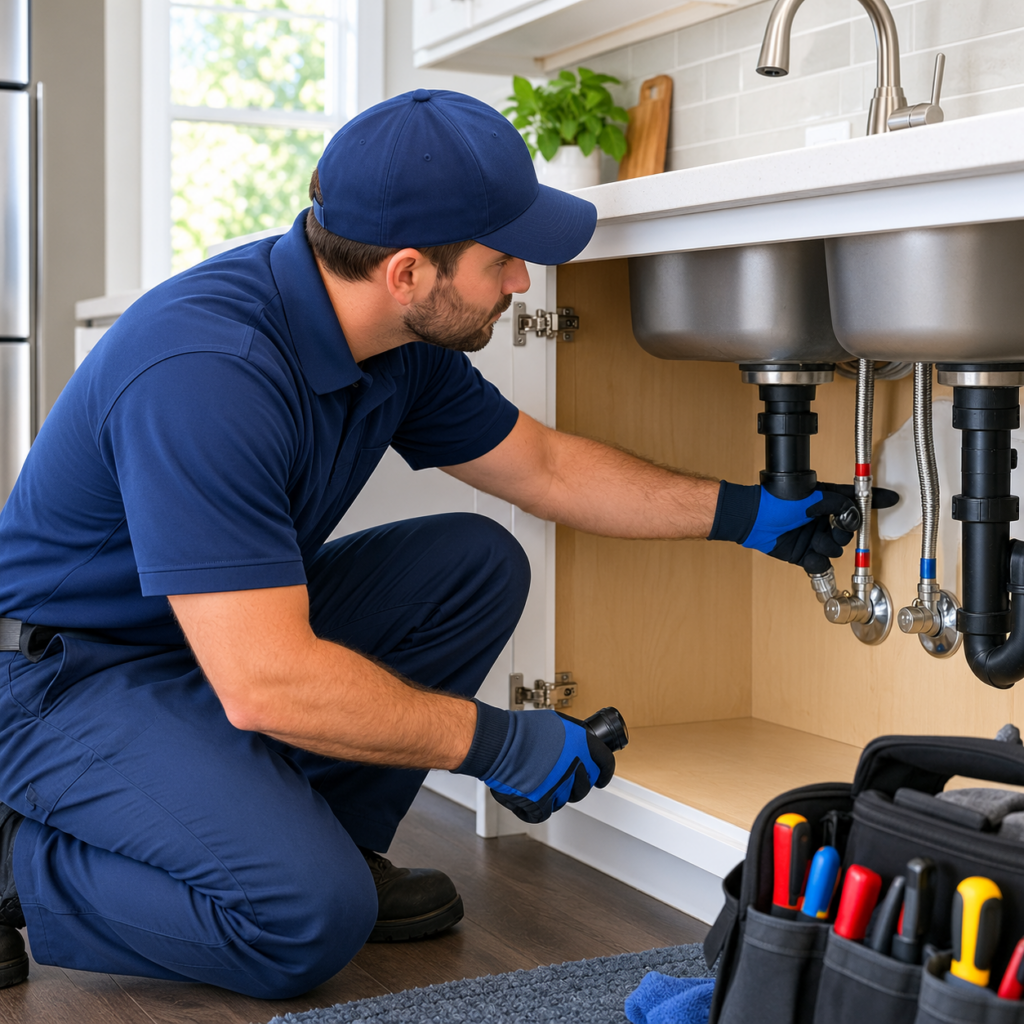
Water treatment services
01
Water Testing
On a well, a test tells you hardness, pH, iron, manganese and sulfur, which between them decide everything else. On community water it is worth testing for hardness alone before you spend money on a tankless heater. We test first as a matter of course, because recommending equipment without a result is guessing with your money.
02
Softeners, for Hardness
Hardness is what scales a water heater element and what clogs a tankless heat exchanger. A softener in front of either one is the difference between equipment that reaches its expected life and equipment that doesn’t. It does nothing at all for iron staining or for acidic water, which is why the test comes first.
03
Neutralizers, for Acidic Water
Low pH is the one that costs the most and shows the least. It dissolves copper from the inside until a pinhole opens, usually in a ceiling, usually while nobody is in the house. If a repipe is on the table and the water is acidic, treating the water is part of the same job. New copper on untreated acidic water fails the way the old copper did.
04
Filtration, for Iron, Manganese and Sulfur
Rust-colored staining in sinks, tubs and laundry is iron or manganese. The rotten egg smell, usually stronger in hot water, is hydrogen sulfide. Both are treatable and both need the right equipment for the concentration the test found, which is another reason the test isn’t a formality.
Where We Work
Areas we serve
Based on Cedar Neck Road in Ocean View, covering Sussex County and the shore communities around it. Whether you are on a well or on community water changes the whole conversation, so tell us which when you call, and tell us if you don’t know.
- Ocean View, DE
- Millville, DE
- Frankford, DE
- Rehoboth Beach, DE
- Bethany Beach, DE
- Selbyville, DE
- Dagsboro, DE
- Lewes, DE
Don’t see your town? Call us. We travel.
Good to Know
Water Treatment Questions We Get Asked
Can’t see vours? Call and ask – we’d rather answer than have you guess
I'm buying a house on a well. When should I test?
Before you close. Testing costs very little, it takes a few days to come back, and it tells you whether you are looking at a softener, a neutralizer, a filter, or nothing at all. Before you sign it is information you can negotiate with. After you sign it is a bill. This is the single most useful thing we tell people here and almost nobody hears it in time.
What does a water test actually look for?
On a well: hardness, pH, iron, manganese and hydrogen sulfide, which between them cover almost everything that causes trouble in this area. Bacterial testing is a separate test and worth doing on a purchase. On community water, hardness is the one that matters most for your appliances, and a simple test answers it.
Do I need treatment if I'm on community water?
Often not, and we will say so. The common exception is hardness, and the common reason to care about it is a tankless water heater, which scales far faster than a tank does. If you are on community water, have no staining and no smell, and you are not putting in a tankless unit, you may well need nothing.
My hot water smells like eggs. What is that?
Hydrogen sulfide, and the fact that it is worse on the hot side is the clue. It is a nuisance rather than a danger at the concentrations we usually see, but it does not go away on its own and it gets into laundry. Sometimes the fix is at the water heater rather than a whole-house filter, which is a much smaller job, so it is worth having someone look before you buy equipment.
Could my water be why my pipes keep leaking?
If the leaks are pinholes in copper and the house is on a well, quite possibly yes. Acidic water dissolves copper from the inside out, so the pipe fails in several places over a few years rather than one place once. Treating the water and repiping belong in the same conversation, because doing the pipe without the water means doing the pipe twice.
How often should I retest?
On a well, annually is sensible, and after any work on the well itself. Groundwater is not static and a result from five years ago is not telling you about today. If you have treatment equipment in place, a retest also tells you whether it is still doing its job, which is the part people skip.
Ready to get started?
We answer the phone 24 hours a day, every day of the year